 CHAIR TRAFFIC
“The leads are already there. Nobody ever went and got them.”
How to show up when somebody nearby searches
“Barber Near Me”
Without ever having to be the tech guy in your own shop.
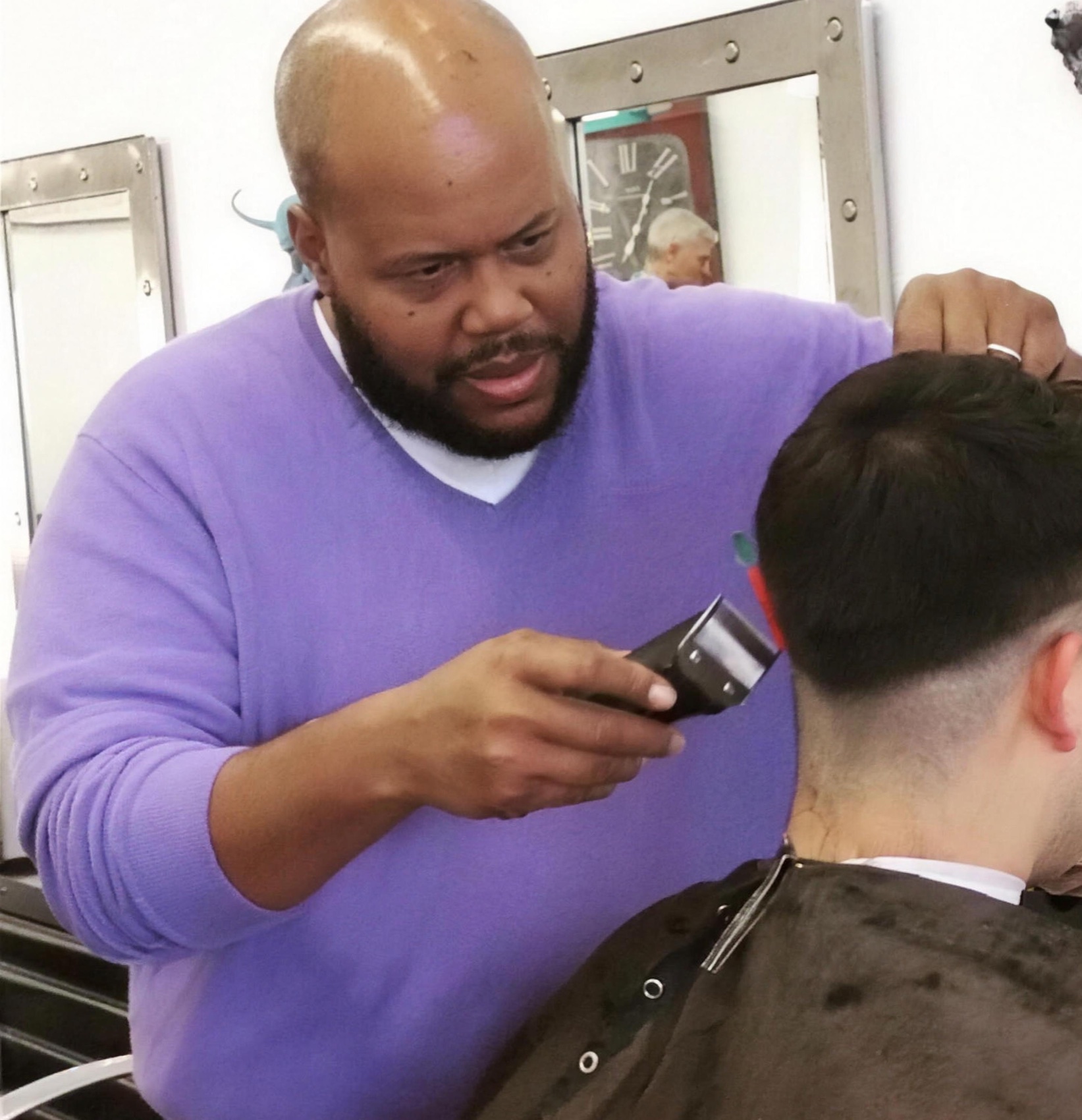
Our founder is a barber. Chair Traffic was built for shop owners by somebody who has worked a dead Tuesday and watched a shop he knew was worse come up above him on search — then went and fixed it.
- Leads you don’t pay for
- From people already searching
- Nothing for you to run
Where does your shop actually stand?
Your review count, next to the three shops Google is showing instead of you.
From: Gerard Muhammad — journeyman barber, former shop owner
The part you never see
Somebody three blocks from your door searched for a barber this week.
They saw three shops. Not one of them was yours. They picked one, sat down, got the cut, paid and walked back out.
No missed call. No voicemail. No bad review. Nothing on your books says a thing, because on your end nothing happened at all. And it’s going to happen again tomorrow.
By the time anybody picks up a phone the decision is already made. They looked, they compared, they chose — and the only thing they had to go on was what other people wrote about your shop.
A slow month reads like a slow month. It never reads like a leak.
Your books show every cut that came through the door. Nothing shows the ones that never got there. That’s why this one is so hard to catch.
What people do before they walk in
The decision gets made in four seconds.
97%
read the reviews before choosing a local business
47%
won’t use a business with fewer than twenty reviews
74%
only count reviews from the last three months
45%
now use AI to find a local business
Local Consumer Review Survey 2026 · 1,002 US adults · we didn’t run this study, they did
None of it is about your work.
Forty-seven percent filtered you out before they ever saw a single fade you cut. That’s not a talent problem. It’s a paperwork problem, and nobody ever handed you the paperwork.
And here’s the one nobody tells you — reviews expire. Three quarters of people only count the last three months, so a shop with two hundred reviews and nothing since spring reads like a shop that closed.
A listing under three stars gets fewer clicks than one with no stars at all. Bad is worse than nothing.
What this actually is
Your Google profile is the only free lead source you’ve got.
Everything else charges you every time. Ads stop the day you stop paying. Flyers run out. Somebody else’s app sends you a customer and keeps thirty percent of the ticket.
A profile that’s built right and has people vouching for it brings somebody in every day and charges you nothing. It’s already sitting there. Most shops just never finished it.
That’s what this is. Not a review score — free leads.
Your Shop
4.9 ★★★★★ (213)
No ad budget. No lead fee. No cut of the ticket.
It sits there working while you cut.
Why it has to come first
Reputation is the ground floor. Everything else gets built on top of it.
When I opened my shop, nobody in that city knew my name. So I watched what a stranger actually does when he needs a haircut. He doesn’t ask a friend — he doesn’t have one here either. He pulls his phone out.
Whatever comes back on that screen is the decision. Took me a while to understand why it answers the way it does.
The ground floor · Reputation
Google has always ranked you by what other people say about you.
In ’98, search engines ranked a page by how many times a word showed up on it. So people typed the word a thousand times and won.
Two students fixed it. Don’t read the page — count who links to it. A link is a vote. Whoever other people vouched for goes to the top. That’s Google. That one idea built the whole company.
Nobody links to a barber shop. So on the corner, Google counts the only vote it can find: the review.
Google doesn’t decide how good you are. It counts who says you’re good.
Google’s own words — three things decide who shows up
- Distance — how close you are. You can’t move the shop.
- Relevance — whether your profile says you do what he asked for.
- Prominence — how well known you are. Google’s documentation says review count and score feed it.
Two of those are fixed the day you sign your lease. Prominence is the only lever on the building — and nobody in your shop is touching it.
Floor two · Your own website
Then Google made the shelf smaller.
A local search used to show seven shops. In 2015 Google cut it to three. Four shops stopped showing that afternoon and nothing about them had changed.
Three chairs in the waiting room. Whole city trying to sit down.
So we start where the votes get counted. We plug straight into your Google profile — not a report we mail you, a live line into the account. Every review lands in one place. Every one gets a reply, because 89% expect the owner to answer and most shops answer nothing. Hours, category, services and photos get kept right, because that’s the relevance half.
You’re cutting. It’s working.
Floor three · Texting your customer list
Why you need a website — and it’s not for the reason you think.
Congress passed a law about telemarketing in ’91, making somebody liable when your phone rings through dinner. Then everybody moved to cell phones and started blasting them.
So the carriers put up a gate. Want to text from a regular ten-digit number? Register the business first — legal name, tax ID, and a website they can pull up to confirm you’re real.
No website, no registration. No registration, your texts get filtered before they reach a phone.
The website isn’t a brochure. It’s the ID you show the phone company.
So we build you one. Not as an add-on, not as something you go handle first — it comes with the rest, because without it none of the rest turns on.
And yes — your booking app texts people. That’s the app’s line, texting somebody who already booked. Texting every customer who ever sat in your chair, from your number, is a different thing — and that’s the one that needs the ID.
Floor four · Bookings & reminders
Now you go get what you’re already owed.
We go back through every customer who ever sat in your chair and ask. That’s the back pay. Those haircuts are done — you just never got paid the second time for them.
Then it never stops. Every new customer gets asked the day after he leaves, when he likes his cut most. Takes him about eleven seconds.
Your work is already good. Nobody ever asked.
Same line runs your confirmations and reminders. One number, instead of six apps and three bills.
Floor five · Ads & promotions
This is the floor everybody tries to sell you first.
Say you spend the money and the ad works. He clicks. Where does he land? Same profile, same reviews, same decision he was always going to make.
97% read the reviews. 68% won’t go under four stars. 47% won’t use a shop with fewer than twenty. And 74% only count the last three months — reviews expire.
Every one of those is a filter you already paid to reach.
That’s not a bad ad. That’s a good ad landing on nothing.
Now look at the order.
Reputation is the floor — the only vote Google counts on the corner. The site is the ID that lets you speak. The texting is the voice. The bookings are what it brings back. The ads are the roof, and the roof goes on last.
Every floor is worth money. Not one of them holds weight without the one under it.
That’s the part nobody explains to a shop owner. They sell you the roof and skip the floor.
Who’s behind this
Our founder opened a shop in a city he didn’t grow up in.
Most barbers start young, in their own neighborhood. The first clientele is the people you went to high school with — the block, the family, the folks who already know your name. That warm market is what fills the chair while you find your feet.
He didn’t have one. He opened up somewhere he had no history and nobody knew him. That’s where he learned that opening the shop is only the start.
So that’s where he learned to bring traffic in — how to get people who had never heard of him to walk through the door. Not because he wanted to be a marketer. Because he had to fill the chair.
Life moved him out from behind the chair after that, and he spent years on the systems side of other people’s businesses. Chair Traffic is him coming back to what he came from.
That’s the whole reason this works. It wasn’t built by a software company that picked barbershops off a list. It was built by somebody who has had clippers in his hand and a chair to fill on the same afternoon — which is why the first rule here is that the last thing a barber needs is homework. None of it lands on you.
What we actually do
The three secrets that put your shop’s reviews on autopilot.
You built this shop with your own hands — every chair, every wall, every regular who keeps coming back. This is the one part that shouldn’t need them.
You log into your Google account through our software. We never see your login and we never touch your password. Takes a few minutes, once — and it’s the only part of this that needs you at all.
We go through the profile and fix what’s costing you — services, hours, categories, the description, real photos of the shop and the work. Google stops reading a half-finished listing and starts reading a legitimate business.
The automation goes back through every customer you’ve already served and asks each one for a review. Anybody who already left one never gets asked again. Then it keeps running on every new customer, by itself, for as long as you’re open.
Every one of those is something you can watch happen. We’re not promising you a spot on Google — nobody can. We’re promising a profile that’s finished and a review count that starts moving. You’ll know it’s working when your phone starts buzzing.
What that means on a Tuesday
Nothing about your work has to change.
The people already searching for a barber in your neighborhood start seeing a finished profile with a real review count under it — the ones who are going to sit in somebody’s chair today, and right now it isn’t yours.
You stop paying for attention you already earned. Every customer who ever liked your work is a review you never collected, and going back to get them costs nothing in advertising.
Nobody in your shop has to remember to ask. It happens on its own, every customer, whether it’s a slow Tuesday or you’re four deep — and it never lands on the barber.
You never have to be the tech guy in your own shop. There’s a system behind this and we walk you through it when we set you up — be in it as much or as little as you want. It runs either way.
A slow month stops being a mystery. You’ll know what got asked and what came back, so you can tell a quiet week from a leak.
Your shop finally looks like what it actually is. All those years of good work, and the number under your name finally says so.
Barbers don’t leave over loyalty — they leave over money. A chair that stays full is a barber who’s still there next year.
89% expect the owner to reply. Most shops have years of silence sitting there, answering for them.
The bottom line
It runs whether you think about it or not.
Once you’re connected, we finish the profile, then go back and collect the reviews you never got from customers you already served — and keep every new one coming in, with every review that lands answered in your voice.
Your Google profile, built out properly
Most shops have a Google profile somebody else made and nobody ever filled in properly — no service list, wrong hours, no description, photos from two owners ago. We go through it line by line: what you actually do, your hours, every service, real photos of the shop and the work, all of it optimised so the profile earns its place.
That’s the difference between a listing Google trusts and one it doesn’t. Done by hand, once, and it stays done.
Your back pay
Every person who sat in your chair and walked out happy was a review you earned. Almost none of them left one — not because they didn’t want to, but because nobody ever asked.
That’s back pay. Work you already did, for people who already liked it, that never got systematised where it counts. So the first thing our system does is go get those reviews. Every customer you’ve ever served — the one from last week and the one from four years ago — gets asked, from your shop, in your words.
It runs once, at the start. It’s the week your number moves.
Straight with you
The shop with two hundred reviews didn’t get them last week.
That shop started three years ago. Maybe four. A few every month since, and now it’s one of the three Google shows. It was never talent and it was never luck — the only thing between your shop and that one is a start date.
Nobody can promise you a spot on that list. Google decides it, and the next six agencies that call your shop this month will promise it anyway.
Here’s what they won’t tell you: that shop isn’t stopping. Every month you wait it adds a few more and yours stays where it is, so the gap doesn’t hold — it widens. The start date is the only part of this you control.
Start here
Find out where you actually stand.
Your review count, your rating, and the count the shop showing up above you has.
Keep every chair full.
Gerard
P.S. Every month you wait, more of what you already earned expires. Three quarters of people only count the last three months, so the good work from two years ago is already gone. And while it’s expiring, the shop three blocks away is collecting the customers who came looking for you.